





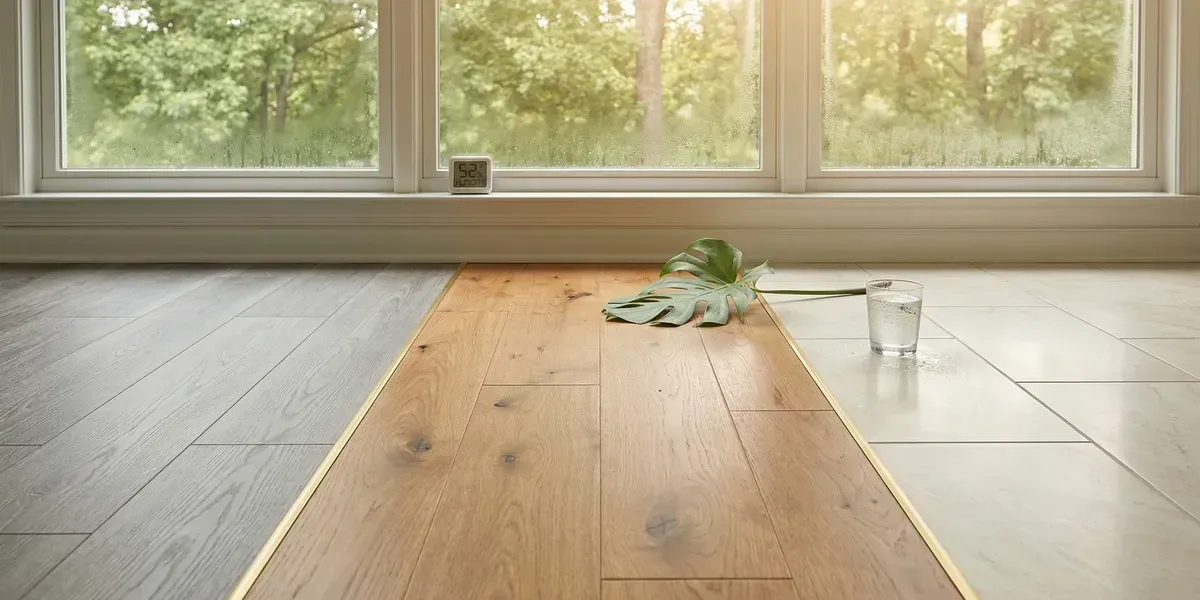
Best Flooring Options for Atlanta's Humid Climate
Living in Atlanta means dealing with a subtropical climate where summer humidity regularly hits 60% to 90% outdoors. Even with air conditioning, indoor moisture levels can fluctuate significantly between seasons. Choosing the right flooring material isn't just about looks; it's about picking something that can handle Georgia's moisture without warping, buckling, or growing mold.
Here's how the most popular flooring options stack up for Atlanta's climate, ranked from most to least humidity-friendly.
1. Luxury Vinyl Plank (LVP) - Best Overall for Humidity
Luxury vinyl plank is the undisputed champion for moisture resistance. Its synthetic core is 100% waterproof, meaning it won't expand, contract, or warp regardless of humidity levels. This makes LVP an excellent choice for every room in your Atlanta home, including basements, bathrooms, and kitchens.
Pros for Atlanta:
- Completely waterproof - no reaction to humidity changes
- Handles temperature swings without expanding or contracting
- Won't grow mold or mildew from moisture exposure
- Installed as a floating floor, so it accommodates minor subfloor moisture
Considerations: While LVP itself is waterproof, moisture can still get trapped between the LVP and the subfloor if there's a serious leak. Proper installation with a moisture barrier on concrete subfloors prevents this.
2. Tile - Excellent Moisture Performance
Ceramic and porcelain tile are naturally impervious to moisture, making them a top choice for high-humidity environments. There's a reason tile is the go-to flooring in tropical climates around the world.
Pros for Atlanta:
- Zero moisture absorption (porcelain absorbs less than 0.5%)
- Perfect for bathrooms, kitchens, laundry rooms, and entryways
- Stays cool underfoot in summer, a comfort bonus in Georgia
- Extremely durable and long-lasting
Considerations: Grout lines need periodic sealing to prevent moisture penetration. Tile can feel cold in winter without radiant heating. It's harder underfoot than other options, which some homeowners find uncomfortable for extended standing.
3. Engineered Hardwood - Good with Proper Care
Engineered hardwood gives you the beauty of real wood with better moisture performance than solid hardwood. Its layered plywood core resists expansion and contraction much more effectively than a solid plank.
Pros for Atlanta:
- Plywood core cross-grain construction limits expansion
- Can handle moderate humidity fluctuations without gapping
- Can be glued down (more stable) or floated over a moisture barrier
- Can be refinished once or twice depending on wear-layer thickness
Considerations: Engineered hardwood is moisture-resistant, not waterproof. Keep your home's humidity between 35% and 55% year-round with your HVAC system. Standing water will still cause damage. Quality matters significantly: thicker wear layers and more plywood layers mean better stability.
4. Laminate - Proceed with Caution
Laminate flooring has improved over the years, and many modern products include water-resistant cores (look for WPC or SPC laminate). However, traditional laminate has an MDF core that swells when exposed to moisture.
Pros for Atlanta:
- Newer water-resistant laminate handles humidity better than older products
- Affordable option that looks good
- Floating installation allows for seasonal expansion
Considerations: Standard laminate is risky in Atlanta's climate. If you go this route, invest in water-resistant laminate specifically and avoid installing it in bathrooms, basements, or kitchens. Even water-resistant laminate can't handle standing water or prolonged high humidity.
5. Solid Hardwood - Beautiful but Needs Attention
Solid hardwood remains a top choice for Atlanta homeowners who value natural beauty, character, and home value. It can absolutely thrive in our climate, but it requires more attention to indoor conditions.
Pros for Atlanta:
- Unmatched natural warmth and beauty
- Can be refinished many times over a 100-year lifespan
- Excellent resale value in the Atlanta housing market
- Countless Atlanta homes have had solid hardwood for decades
Considerations: Solid hardwood needs consistent indoor humidity control. Expect minor seasonal movement (small gaps in winter, slight expansion in summer). Proper acclimation before installation is essential. Use your HVAC to maintain 35% to 55% humidity year-round. With these precautions, solid hardwood performs beautifully in Atlanta homes across Dunwoody, Marietta, and beyond.
6. Carpet - Lowest Humidity Tolerance
Carpet is the most vulnerable flooring type in humid climates. It absorbs moisture from the air, which can lead to mold growth, musty odors, and allergen accumulation, especially in below-grade spaces.
Where carpet works in Atlanta:
- Bedrooms with good HVAC and air circulation
- Upper floors where moisture issues are minimal
- Rooms with consistent climate control
Where to avoid carpet:
- Basements (high moisture risk)
- Bathrooms and kitchens (water exposure)
- Rooms that stay closed for extended periods without HVAC running
If you love the softness of carpet, consider using it strategically in bedrooms while choosing a moisture-resistant option like LVP or tile for the rest of your home.
Practical Tips for Any Flooring in Atlanta
Regardless of which flooring you choose, these habits will help it last longer in our humid climate:
- Run your HVAC consistently. Even when you're away, keep the AC running in summer and heat in winter to maintain stable humidity.
- Use a dehumidifier in basements or rooms that tend to collect moisture.
- Fix leaks immediately. A slow plumbing leak under a bathroom floor can ruin any flooring type.
- Use doormats at entries to catch moisture and red clay tracked in from outside.
- Check crawl spaces for moisture barriers. Many older Atlanta homes have inadequate crawl space vapor barriers that allow ground moisture to reach flooring from below.
The Bottom Line
Every flooring type can work in Atlanta with proper installation and care. LVP and tile are the lowest-maintenance options for humidity resistance. Engineered and solid hardwood deliver unmatched beauty and value when paired with consistent climate control. Carpet works best in bedrooms and upper floors where moisture isn't a concern.
Not sure which option is right for your home? Request a free estimate and we'll help you pick the best flooring for your specific rooms, lifestyle, and budget. We've been installing floors across the Atlanta metro for years and know exactly what works in our climate.